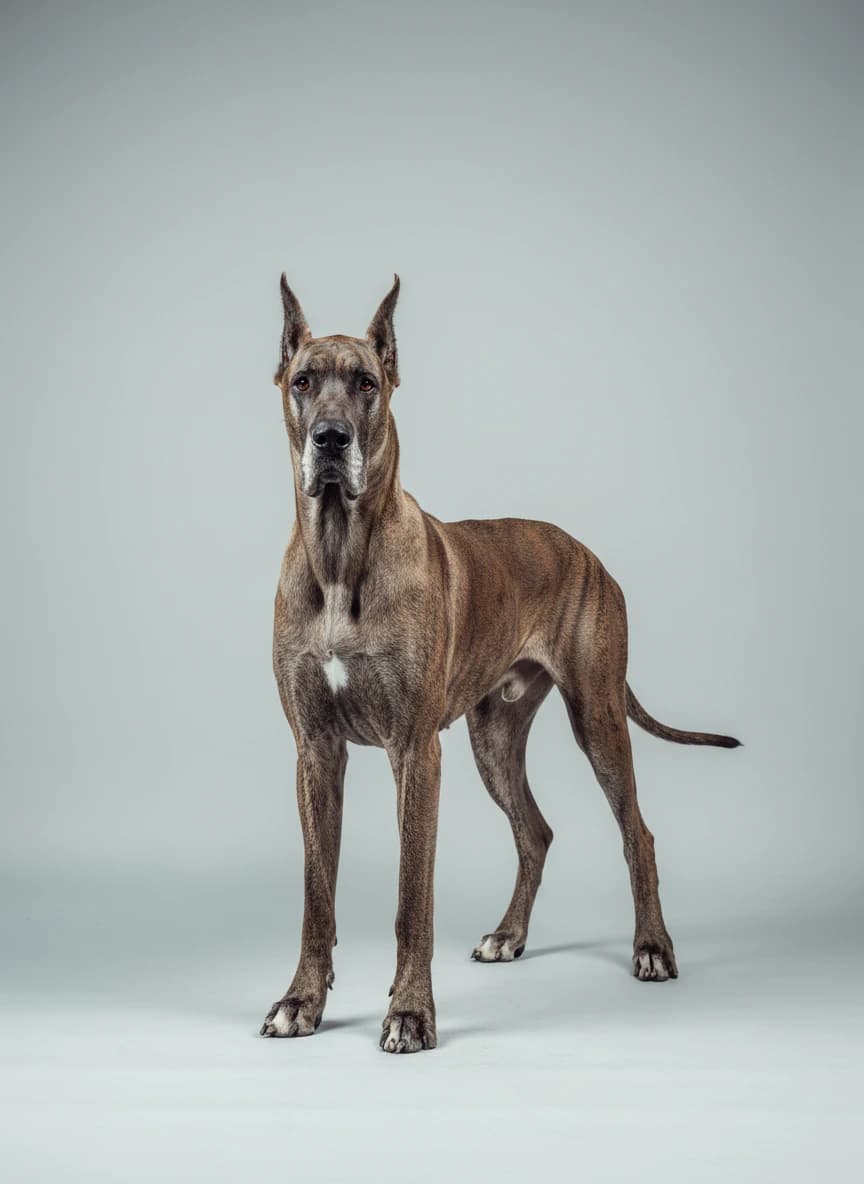
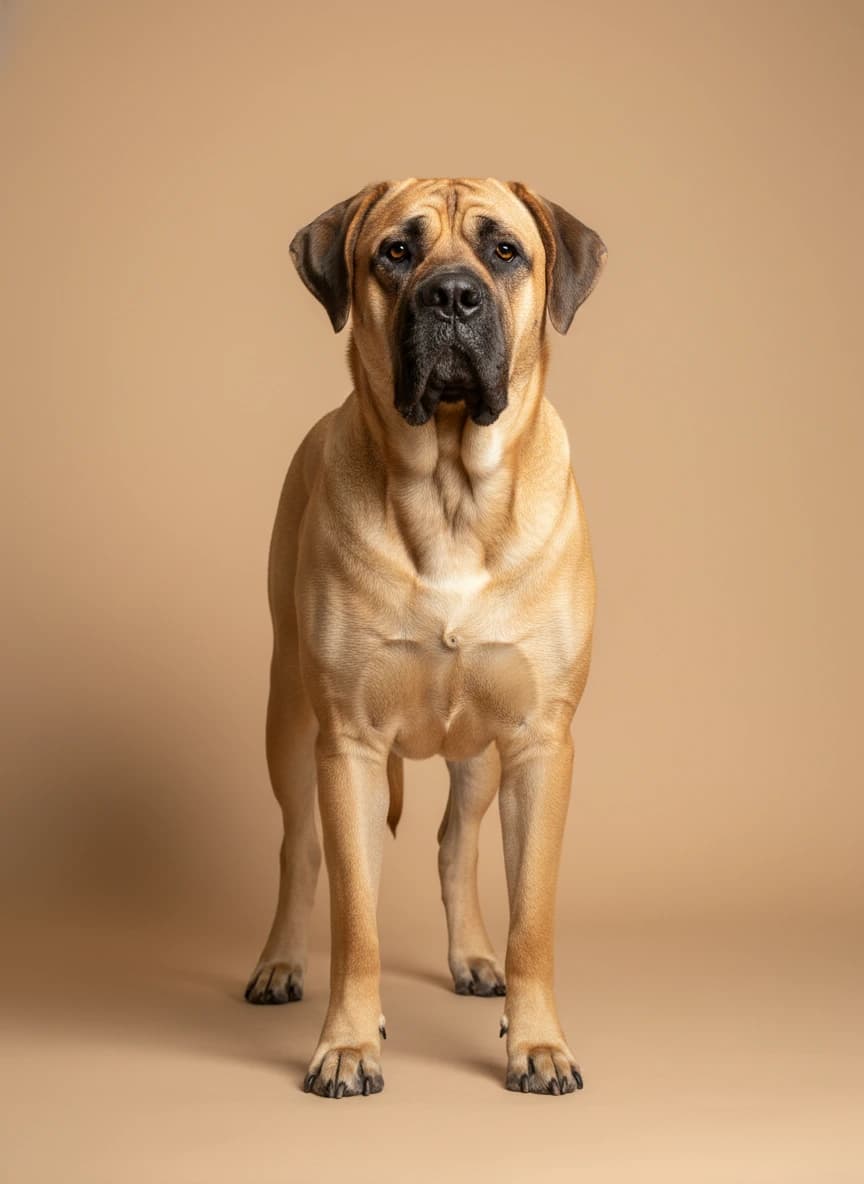
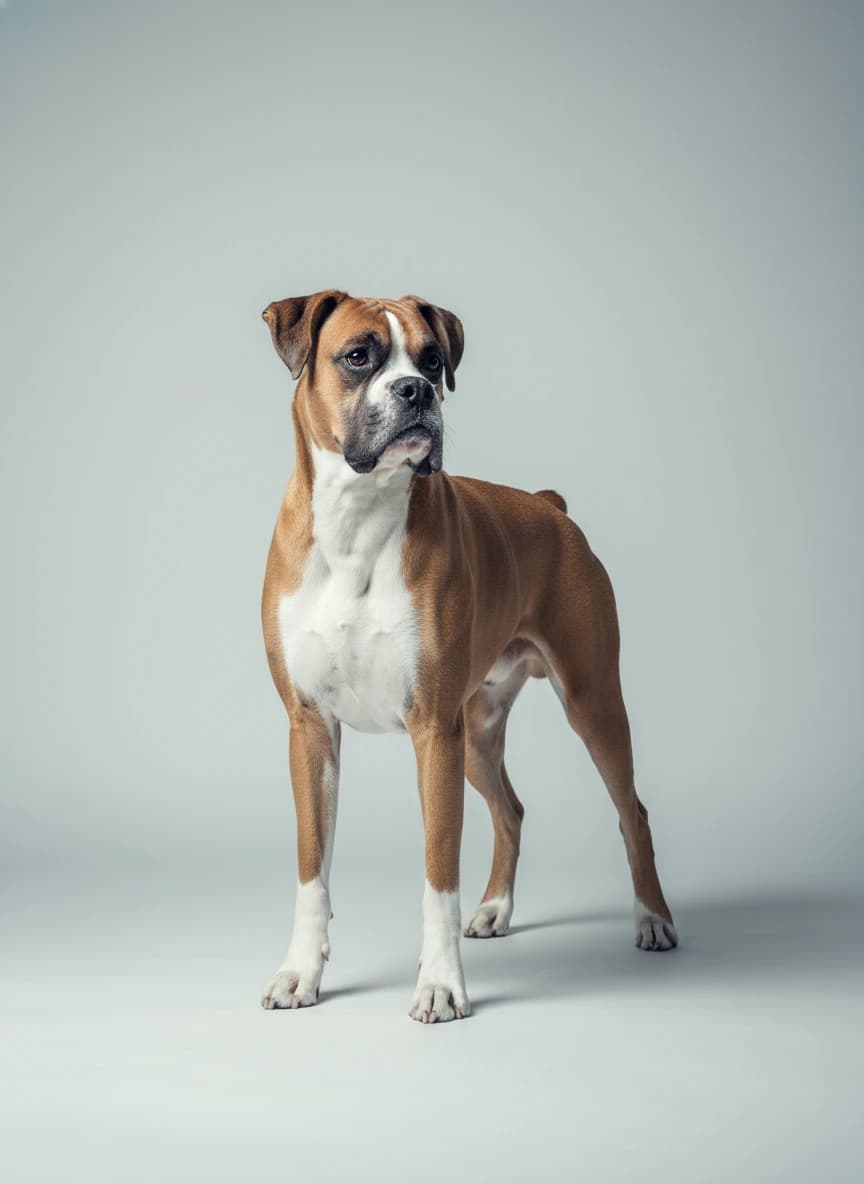
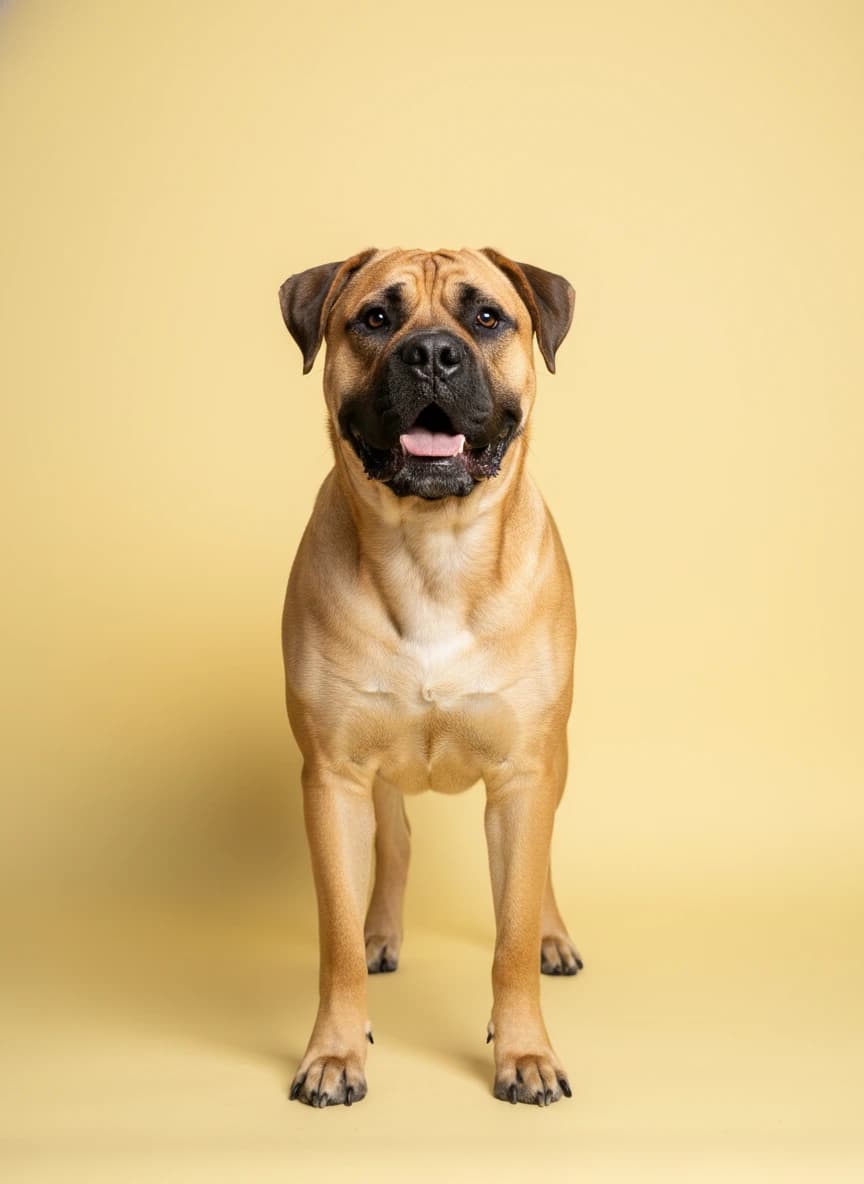
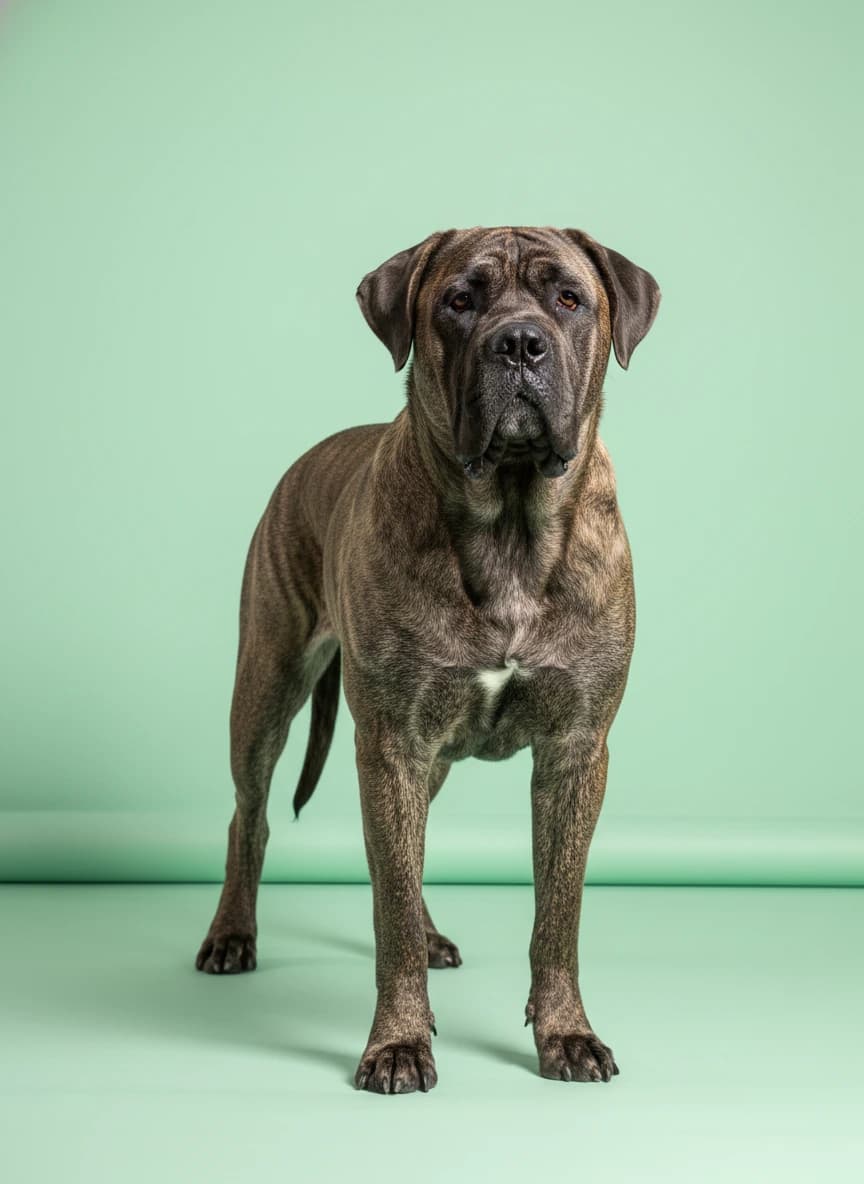
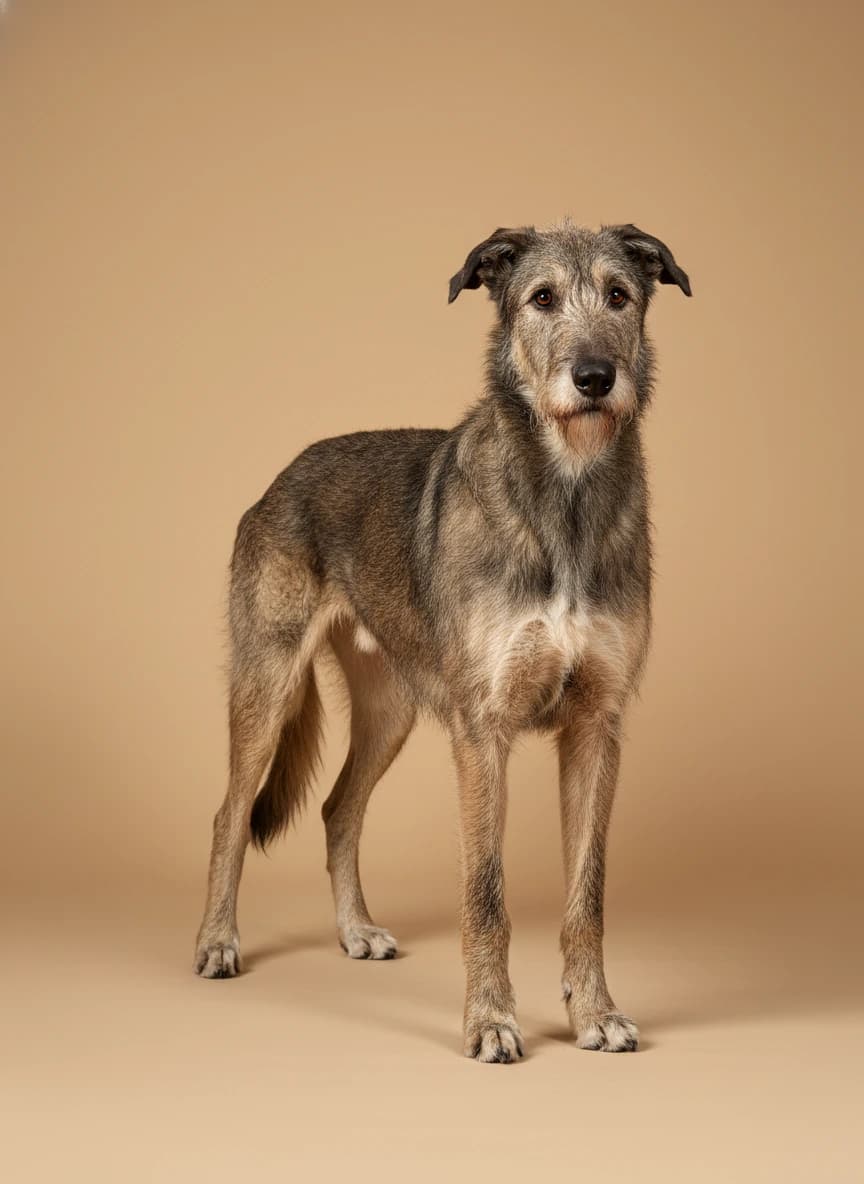
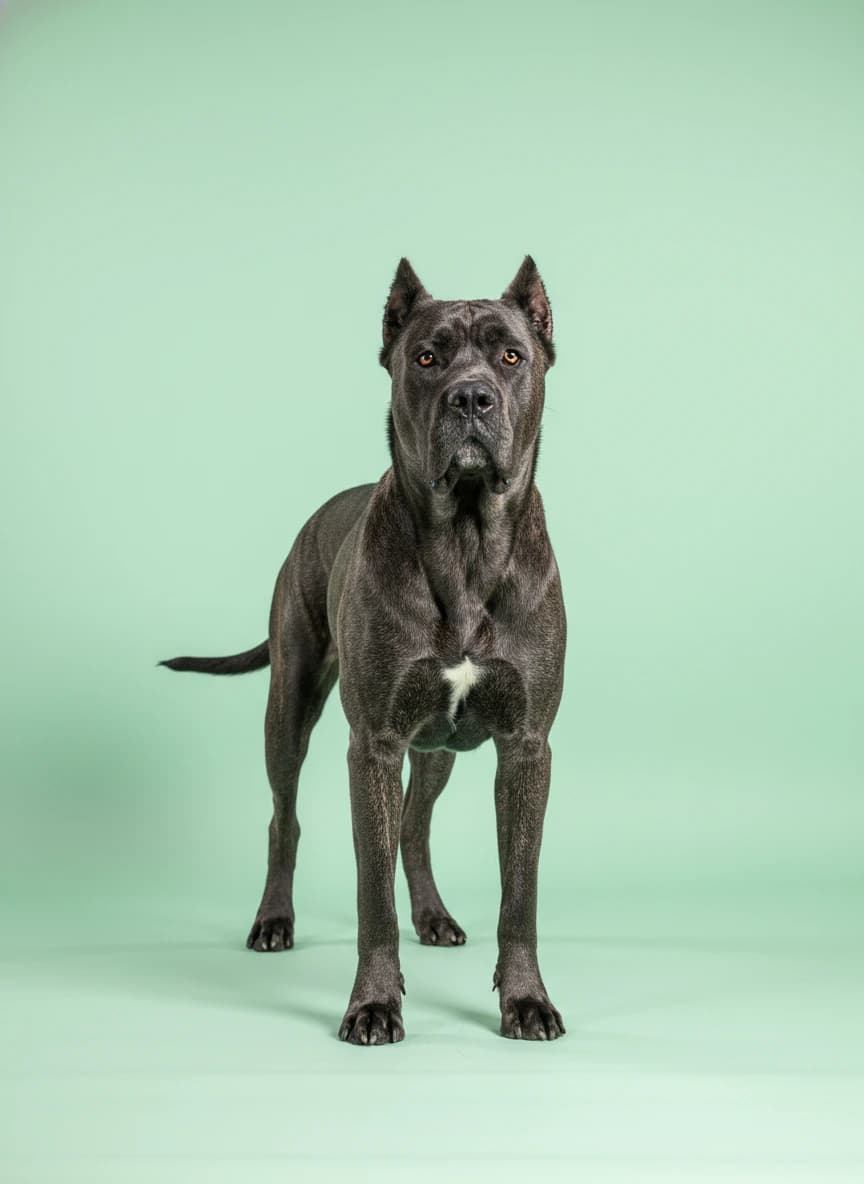
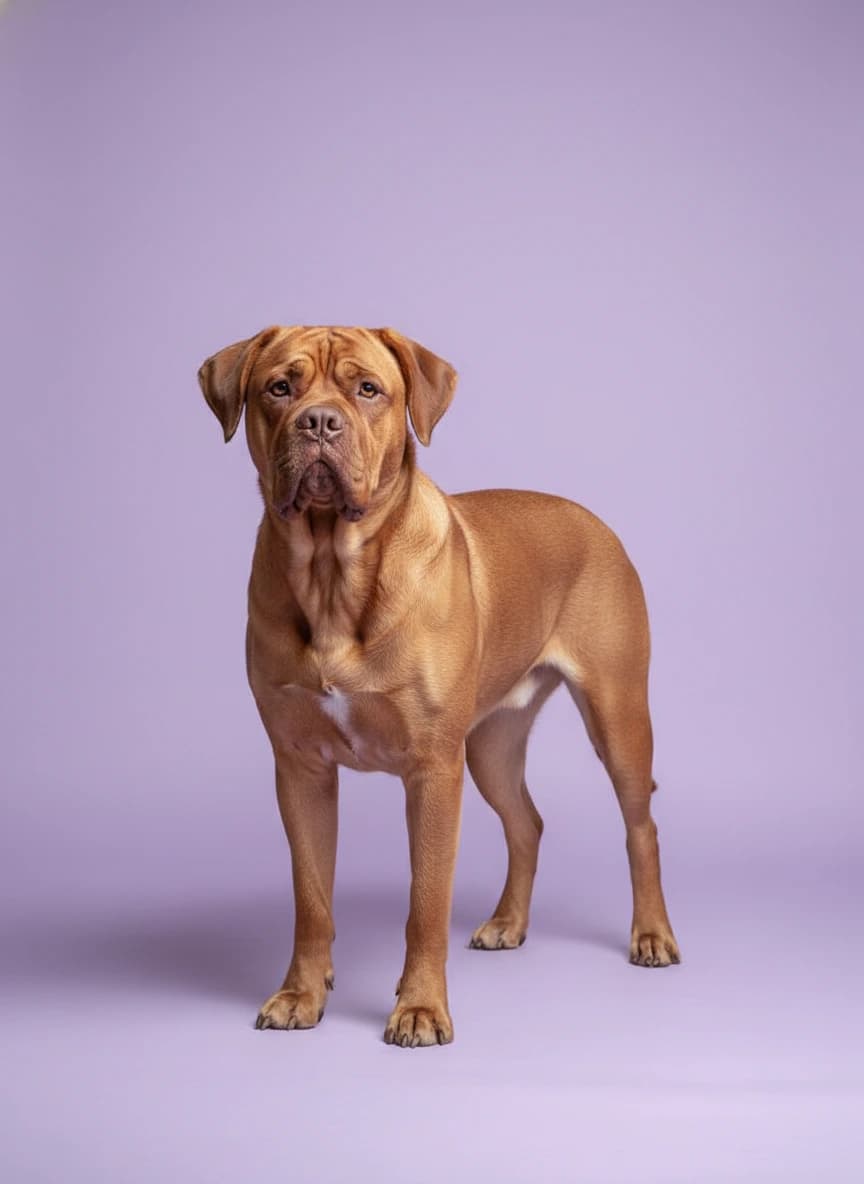
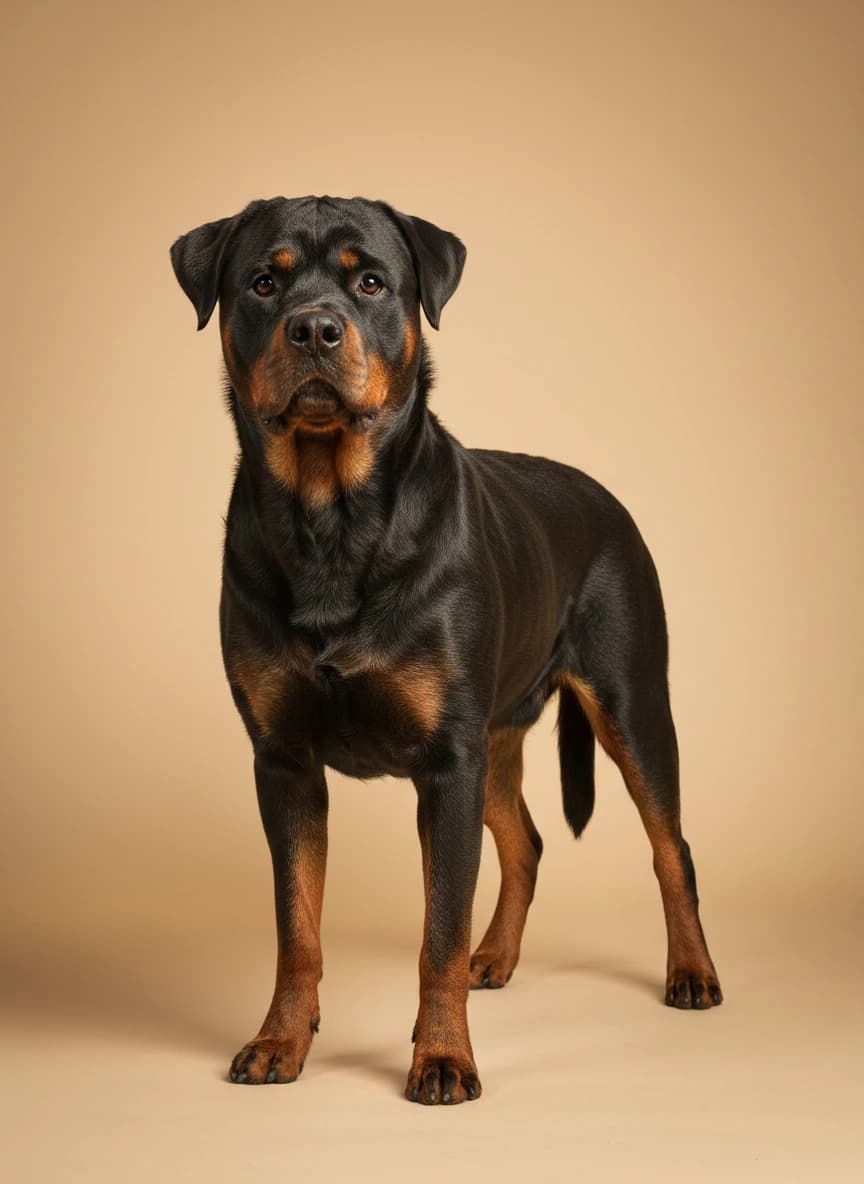
Aussi connue sous le nom: Deutsche Dogge, Mastiff Allemand, Danne, Géant Bienveillant
Allemagne
Espérance de vie
7-10 a
Poids
45-90 kg
Exercice
Modéré
Profil de la race
Taille
Géant
Type de race
Race pure
Éducabilité
Modéré
Toilettage
Faible
Description
Le Grand Danois mérite vraiment son surnom de « Géant Bienveillant ». Ces chiens sont profondément affectueux, souvent convaincus qu'ils sont des chiens de genoux malgré leur taille imposante, s'appuyant volontiers de tout leur poids sur leurs personnes préférées. Ils sont étonnamment gracieux pour leur stature, mais la maladresse est aussi une qualité attachante, alors qu'ils tentent de se glisser dans de petits espaces ou de naviguer dans des coins étroits avec un optimisme plein d'espoir. Leur nature facile signifie qu'ils s'entendent généralement bien avec tout le monde, bien que la socialisation précoce soit essentielle pour canaliser leurs instincts protecteurs naturels. Attendez-vous à un compagnon calme à l'intérieur, ponctué par des courses folles ou des moments d'étreintes intenses. Ils s'épanouissent en compagnie, trouvant le vrai bonheur lorsqu'ils sont blottis avec leur famille.
Envisager une gastropexie prophylactique si approprié
Discuter de la gastropexie prophylactique
Coudes (OFA/FCI)
Consulte ton vétérinaire de confiance pour un conseil propre à ton chien.
Adapté aux allergies
Non
Foyer
Besoin d'espace
Eau
Aime
Expérience requise
Modéré
Poids du mâle
54-90 kg
Poids de la femelle
45-59 kg
Tempérament
Doux, Protecteur, Stable
Tempérament et personnalité
The Great Dane truly earns its 'Gentle Giant' reputation. These dogs are deeply affectionate, often convinced they are lapdogs despite their imposing size, and happily lean their full weight into their favorite people. They tend to be surprisingly graceful for their stature, though clumsiness can be an endearing trait as they attempt to squeeze into small spaces or navigate tight corners with hopeful optimism. Their easygoing nature means they generally get along well with most people, though early socialization helps develop their natural protective instincts appropriately. Indoors, they are typically quiet companions, punctuated by occasional bursts of energetic play or intense snuggling sessions. They thrive on companionship and often find their greatest happiness curled up with their family.
Éducation et exercice
Great Danes have moderate exercise needs and benefit from regular, leisurely activity rather than intense athletic demands. Daily walks and moderate play sessions help maintain their health and mental well-being. Their trainability is moderate, meaning they respond well to consistent, patient instruction with positive reinforcement. Early socialization is particularly important to help channel their natural protective instincts constructively. These dogs are eager to please their families and tend to respond better to encouragement than harsh correction. Mental stimulation through interaction with their people is often as valuable as physical exercise for this companion-oriented breed.
Toilettage et soins
Great Danes have low grooming needs, making them relatively easy to maintain. Their short coat requires only occasional brushing to manage shedding and keep their skin healthy. Regular bathing is needed only as necessary. Like all dogs, they benefit from routine nail trimming, ear cleaning, and dental care. Given their deep chest conformation, owners should be aware of signs related to gastric health and discuss preventive measures with a veterinarian. Regular veterinary check-ups are important for monitoring their overall health.
Vivre avec cette race
Great Danes need adequate space despite their laid-back indoor temperament, as their size requires a home with room for them to move comfortably. They are generally quiet indoors but can experience occasional bursts of energetic activity. Their strong desire for companionship means they thrive best with families who can spend significant time with them rather than being left alone for extended periods. Their natural protective instincts, combined with their size, mean early socialization with various people, animals, and environments is beneficial. They tend to be gentle with family members and often coexist peacefully in multi-pet households, though individual temperament varies.
Cette race est-elle faite pour vous
Great Danes are well-suited for owners with some dog experience who appreciate a calm, affectionate companion and have adequate living space. They are ideal for families seeking a gentle, loyal friend rather than a high-energy working dog. Potential owners should be prepared for the commitment of a large dog, including food costs, veterinary care, and the physical space required. These dogs are best for households that can provide regular companionship and are not suited to owners who frequently leave them alone for extended periods. If you value a devoted, easygoing family member who loves to be near you and don't mind occasional clumsiness or goofy antics, a Great Dane may be a wonderful fit.
Questions fréquentes
How long do Great Danes typically live?
Great Danes generally have a shorter lifespan than many other dog breeds, typically living 7 to 10 years. This is common among giant breed dogs. Regular veterinary care and attention to their health needs can support quality of life throughout their years with you.
Are Great Danes good with children?
Great Danes tend to be gentle and patient, traits that often work well in families with children. However, their large size means supervision with small children is important to prevent accidental knocking over. Early socialization and proper introduction techniques help ensure positive interactions.
Can Great Danes live in apartments?
While Great Danes are calm indoors, their giant size means they need adequate living space to move comfortably. Apartments with sufficient room can work, but homes with more space are generally better suited to their physical needs. Daily walks and regular outdoor access remain important regardless of living situation.
What health concerns are common in Great Danes?
Great Danes, due to their deep-chested conformation, have an increased likelihood of gastric dilatation-volvulus (bloat), a serious condition. They may also be prone to cardiomyopathy and orthopedic issues. Discussing preventive measures, early warning signs, and regular health monitoring with your veterinarian is important for this breed.
Do Great Danes require a lot of exercise?
Great Danes have moderate exercise needs and do well with daily walks and casual play rather than intense athletic activities. Their large frame is not built for strenuous exertion. Mental stimulation through companionship and interaction with their family is often as important as physical exercise for their well-being.
 Allemagne