Also known as: Dobie
Germany
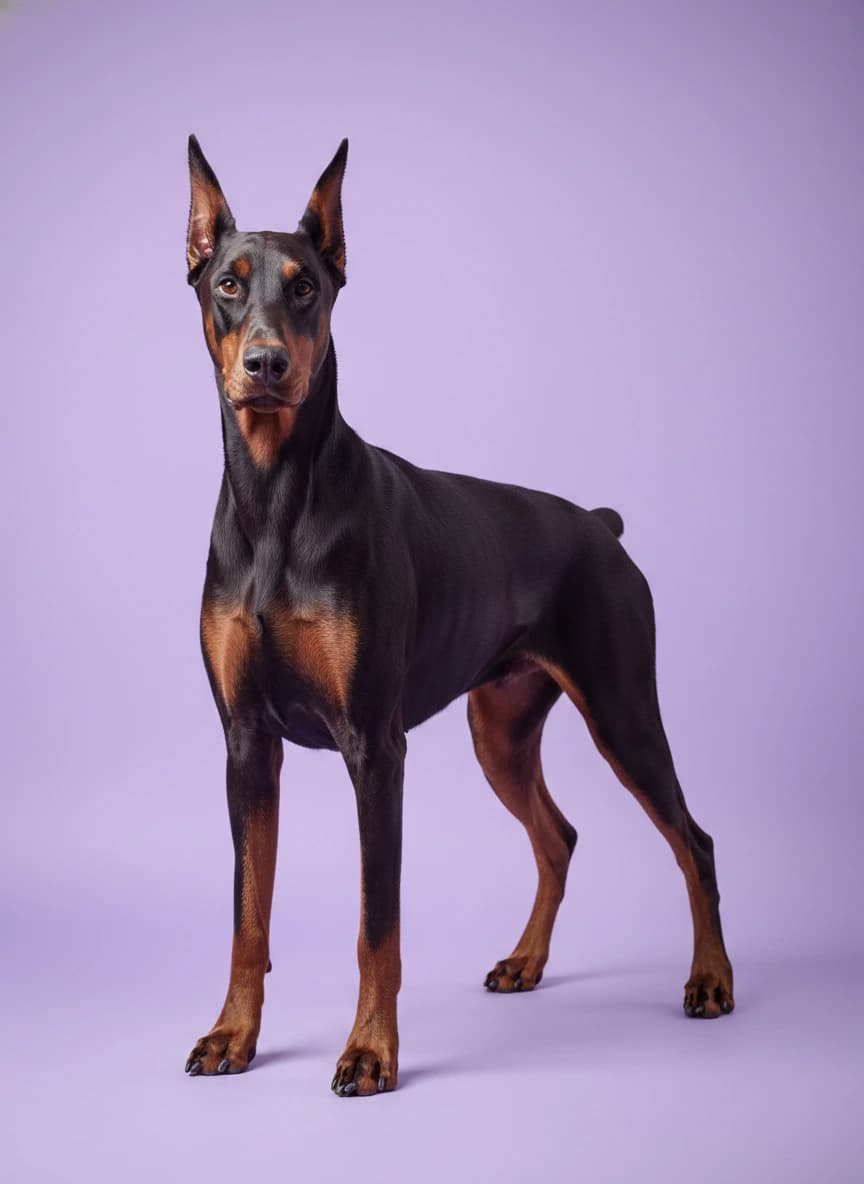
The Doberman Pinscher is a regal and intelligent companion, brimming with an almost human-like awareness. They thrive on having a "job", whether that's guarding their beloved family with unwavering focus or excelling in canine sports. Their loyalty is fierce, often shadowing their favorite person from room to room, a constant, watchful presence. While they possess an intimidating elegance, beneath that sleek exterior lies a sensitive soul craving connection and clear direction. Early, consistent training channels their sharp minds and eager-to-please nature, preventing them from becoming overprotective or strong-willed. A Doberman is a lifetime commitment to an active, engaged partnership.
Common issues
Recommended screenings

Consult your trusted vet for advice specific to your dog.
The Doberman Pinscher presents as a calm, confident, and protective companion with an almost human-like awareness of their surroundings. These dogs tend to be fiercely loyal, often shadowing their favored person throughout the home and demonstrating unwavering focus on their family. While their sleek, regal appearance conveys an intimidating elegance, they typically possess a sensitive nature that craves meaningful connection and clear direction. Dobermans generally thrive when given purposeful roles, whether protecting their household or competing in canine sports, and respond well to owners who provide structure and engagement.
Doberman Pinschers are highly trainable and eager to please, making them responsive to consistent, early instruction. Their sharp minds benefit from regular mental stimulation and purposeful activities that channel their intelligence constructively. Moderate exercise requirements mean daily activity is important to maintain their physical and mental well-being. Training should be firm yet fair, as these dogs tend to respond better to clear expectations than heavy-handed correction. Without consistent guidance and purpose, they may develop overprotective tendencies or display strong-willed behavior.
Doberman Pinschers have low grooming needs, with a short, sleek coat that requires minimal maintenance. Regular brushing helps manage shedding, and routine nail care, ear cleaning, and dental hygiene are standard practices. Due to their deep-chested conformation, owners should be aware of signs associated with gastric dilatation-volvulus (bloat) and discuss prevention strategies with a veterinarian. They tend to thrive in moderate climates and benefit from consistent veterinary care to monitor for breed-related health considerations.
Dobermans typically adapt well to house living when their exercise and mental stimulation needs are met. They tend to form strong bonds with their household and may display protective instincts toward their family members. These dogs often do best in homes where they have a defined role or "job" and where owners are actively engaged in their daily lives. Their need for connection means they generally don't fare well with extended periods of isolation. Homes that can provide structure, purpose, and consistent interaction tend to bring out the best in this breed.
The Doberman Pinscher is best suited for experienced dog owners who can commit to an active, engaged partnership throughout the dog's lifetime. Prospective owners should be prepared to provide early, consistent training and mental stimulation, as well as clear leadership. These dogs thrive with individuals or families who can offer purposeful activities and understand their sensitive nature beneath their confident exterior. Dobermans are not low-maintenance companions; they require dedicated time, attention, and a structured home environment. This breed rewards commitment with remarkable loyalty and companionship.